
The Financial Tools That Actually Help Startups Scale in 2026
- Ononkwa Egan
- Mar 30
- 13 min read


There's a moment that almost every founder recognises, even if they don't always talk about it openly. It usually happens somewhere between getting your first real traction and trying to figure out why, despite growing revenue, you always seem to be short on cash. You're issuing invoices but chasing payments. You're spending money on things you approved weeks ago and can't quite remember why. Your accountant is asking for documents you're not sure exist. Your bank account says one thing, your gut says another, and you have a board meeting in three days where someone is going to ask about burn rate.
This is the moment where financial systems stop being an administrative afterthought and become a matter of survival.
In 2026, the best financial tools for startup growth in 2026 are no longer optional; they are essential for maintaining control, improving visibility, and scaling sustainably
The spreadsheet that worked when you had five clients and two employees doesn't work when you have fifty clients, twelve employees, three vendors you pay in different currencies, and a payroll cycle that has to run on time every single month, regardless of whether three clients have paid their invoices yet. It's not that the spreadsheet was wrong before; it's that the complexity has crossed a threshold where manual management creates errors, and errors at this scale create real damage.
What separates startups that scale successfully from those that plateau or crash is often not the product, not the team, not even the market. It's whether the financial infrastructure keeps pace with the business. In 2026, the tools available to do this are genuinely impressive, more capable, more integrated, and increasingly more accessible to businesses operating in markets like Nigeria than they've ever been.
Let's go through all of it properly.
Best Financial Tools for Startup Growth in 2026: Accounting Software

Before anything else, you need to know where your money is, where it's going, and whether what your business is doing is financially sustainable. This sounds obvious. It is obvious. And yet an astonishing number of startups operate without real-time visibility into their own financial position, relying on monthly reports from an external accountant, or worse, on the founder's intuitive sense of whether things feel okay.
Intuition is not a financial system. And monthly reports are already history by the time you read them.
Modern accounting software solves this by creating a live, continuously updated picture of your financial position, automatically syncing with your bank accounts, categorising transactions, generating invoices, tracking who owes you what, managing payroll, and producing the reports you need for investor updates, tax filings, and your own decision-making.
QuickBooks Online

QuickBooks has been the dominant accounting tool for small and growing businesses for long enough that it's become the default assumption in many markets. The reason it has that position is straightforward: it does a very large number of things competently and reliably, and it integrates with almost everything else a business might use.
For Nigerian startups operating in structured markets, particularly those with international clients or investors, QuickBooks' strength in financial reporting, payroll, and tax management makes it a natural choice. The reporting capabilities are particularly important for fundraising: when an investor or lender asks for your P&L, your cash flow statement, or your accounts receivable ageing report, being able to produce these instantly and accurately is a basic expectation. Startups that have to scramble to produce financial reports lose credibility before the conversation has properly begun.
The challenge with QuickBooks for Nigerian startups is primarily the cost; it's priced in dollars, which means naira depreciation has made it progressively more expensive over time. And some of its more powerful features, particularly around payroll and tax, are most useful in markets where the regulatory infrastructure it's designed around actually exists.
Xero

Xero has built its reputation on two things: exceptionally clean design and a genuinely remarkable integration ecosystem. With over 800 third-party integrations, Xero is less of an accounting tool and more of a financial operating hub, connecting your accounting with your payments, your payroll, your inventory, your CRM, and essentially everything else that touches money in your business.
For startups that are global from day one, which increasingly includes Nigerian tech startups that serve international clients and receive investment in foreign currencies, Xero's multi-currency capabilities and strong bank feed automation make it particularly well-suited. The bank reconciliation process, which is one of the most tedious and error-prone aspects of manual bookkeeping, is largely automated in Xero. It learns your categorisation patterns over time and makes increasingly accurate suggestions, requiring less and less human intervention.
Xero is also particularly well-suited for collaborative accounting; the interface makes it genuinely possible for a founder without an accounting background to understand what they're looking at, which means the tool builds financial literacy rather than just outsourcing financial management entirely.
FreshBooks

FreshBooks was built by a designer who was frustrated with how ugly and complicated invoicing software was. That origin story shapes the product; it is, without question, the most user-friendly accounting tool in this category, and it is specifically designed for service businesses where time tracking and project-based invoicing are the primary financial activities.
For Nigerian startups in consulting, creative services, software development, legal services, or any other project-based business, FreshBooks is often the most practical starting point. The invoicing workflow is fast and professional. You can create and send an invoice in under two minutes, and the automatic payment reminders remove the awkward follow-up emails that delay payment for so many service businesses.
The limitation of FreshBooks is that it doesn't try to be a full accounting system; it handles invoicing, expenses, and time tracking excellently, but for complex financial reporting or multi-entity management, you'll eventually need to graduate to something more comprehensive.
Zoho Books

Zoho Books is the most underrated tool in this category, and the reason is straightforward: if you're already using other Zoho products, Zoho CRM, Zoho Projects, Zoho People, Zoho Inventory, Zoho Books integrates with all of them natively, at a price point that is significantly lower than its competitors.
For cost-conscious Nigerian startups that need a comprehensive accounting solution without the dollar-denominated pricing of QuickBooks or Xero, Zoho Books is a genuinely strong option. The feature set is comprehensive, including bank reconciliation, invoicing, expense management, payroll, inventory, project billing, and the Zoho ecosystem as a whole, which gives you a CRM-to-accounting pipeline that larger companies pay considerably more to build.
The tradeoff is that Zoho's products, while functionally capable, tend to lag behind the best-in-class tools in terms of design and user experience. They feel like tools built by engineers rather than designers. That matters less than it sounds. You'll use accounting software because you need it, not because you love using it, but it does mean there's a slightly steeper learning curve.
Spend Management: The Problem That Grows Faster Than Revenue

Here's a pattern that plays out in almost every scaling startup. In the early days, the founder approved every expense personally. They know exactly what's being spent, why, and whether it's worth it. As the team grows, this becomes impossible; you can't be the approval bottleneck for every software subscription, every team lunch, every vendor payment. So you give people spending authority, and suddenly you have a new problem: money leaving the business without adequate visibility or control.
Expense reports are submitted weeks after the fact. Receipts that may or may not exist. Reimbursements that create cash flow complications. Software subscriptions that nobody remembers signing up for and nobody is using. Vendor payments that don't have a clear business justification. These aren't signs of a dishonest team; they're signs of a financial control system that hasn't kept pace with organisational growth.
Ramp

Ramp is built around a philosophy that's almost contrarian in the corporate card space: rather than making it easy to spend, it makes spending intelligent. It gives employees corporate cards with defined spending limits and category controls, automatically categorises every transaction, flags unusual spending patterns, and provides real-time visibility into the organisation's spend.
The savings focus is embedded in the product. Ramp actively identifies duplicate subscriptions, unused software licences, and spending patterns that suggest inefficiency. The 1.5% cashback on all purchases is a useful benefit, but the more significant value is the operational discipline the tool creates. Startups that implement Ramp typically find that the visibility it creates identifies savings that more than offset its cost.
For Nigerian startups with international operations or remote teams, Ramp's ability to issue virtual cards instantly, for specific vendors, for specific amounts, for specific time periods, solves a real problem. You can give a contractor a virtual card to pay for tools they need for a project, with exactly the right spending limit, and the card automatically expires when the project ends. No more giving someone a company card and hoping they spend it appropriately.
Brex

Brex is specifically designed for venture-backed startups, and that positioning shapes everything about the product. It was built to solve the specific problem that funded startups face: they have significant capital on their balance sheet, but founders haven't built the personal credit history that traditional corporate cards require as security.
Brex's underwriting is based on the startup's financial profile, its capital position, its revenue, and its investor base, rather than the founder's personal credit. For a startup that has just raised a seed or Series A round, this means access to meaningful corporate card limits immediately, without personal guarantees.
The financial features extend well beyond corporate cards. Brex offers startup banking, treasury management for idle cash, financial planning tools, and integrations with accounting software. For a growth-stage startup that wants to consolidate its financial stack rather than manage multiple separate tools, Brex's breadth is appealing.
The honest caveat is that Brex's full feature set is most useful for US-incorporated startups or those with significant US-dollar operations. Nigerian startups with primarily naira-denominated operations will get less value from it, though those with international operations or US entities will find it highly relevant.
Nigerian and African Fintech Tools: The Local Infrastructure That Makes Everything Else Work
Everything in the previous two sections is important, but it sits on top of a more fundamental layer: the local financial infrastructure that determines whether your business can actually operate on a day-to-day basis in Nigeria. International accounting tools don't help you if you can't receive payments from Nigerian customers efficiently. Spend management cards don't help if your team can't access cash in the field.
This is where Nigerian and African fintech tools aren't just useful, they are foundational.
Moniepoint

Moniepoint has grown into one of Nigeria's most significant business banking and payments platforms, and its growth reflects how well it has understood the actual needs of Nigerian SMEs and startups.
The core offering is a business account with POS terminal capability, but that description doesn't capture what Moniepoint actually does for businesses. The POS terminal is reliable in a way that earlier-generation Nigerian POS solutions frequently weren't. The settlement is fast. The transaction fees are competitive. And the business account comes with financial management tools, transaction history, cash flow reporting, and expense categorisation, which go beyond what a simple bank account provides.
For startups that have any physical point of sale, retail, food and beverage, services businesses with walk-in clients. Moniepoint's POS infrastructure is worth serious evaluation. The data from every transaction feeds into a financial profile that Moniepoint can use to offer working capital loans, creating exactly the kind of credit flywheel that makes fintech-enabled lending work.
Kuda

Kuda's positioning as "the bank for the free" captures something real about its appeal. The fee structure is genuinely different from traditional Nigerian banking, with free transfers, no account maintenance fees, and a clean mobile-first interface that makes everyday banking significantly less painful.
For early-stage startups watching every naira, Kuda's low-cost business account removes friction from basic financial operations. The ability to open an account, receive payments, make transfers, and manage basic finances entirely from a mobile app, without visiting a branch, without maintaining a minimum balance, without paying for transactions you take for granted, adds up to real savings and real convenience.
Kuda's limitations become apparent as businesses grow beyond basic banking needs. The product is strong on day-to-day banking and weaker on the more sophisticated financial management features that scaling startups need. But as a foundation, particularly for early-stage startups or as a secondary account for specific purposes, it's excellent.
Prospa

Prospa is specifically designed for the segment that traditional banking has most consistently failed: Nigerian SMEs that need business accounts, financial tools, and access to credit but don't meet the requirements that traditional banks impose.
The business account comes with invoicing tools, expense management, and, critically, a credit assessment pathway that uses transaction data rather than traditional collateral requirements. For startups that are generating revenue and have a track record of transactions but lack the formal financial history that bank loan applications require, Prospa's approach to credit is meaningfully more accessible.
The operational tools embedded in Prospa, basic invoicing, payment requests, and expense categorisation, mean that a startup can manage a significant portion of its financial operations within a single platform, reducing the complexity of managing multiple separate tools.
Enterprise-Grade Tools: Knowing When You've Outgrown the Basics
There's a specific inflexion point in startup growth where the tools that got you here start to actively hold you back. It usually happens around the time you're managing multiple revenue streams, potentially multiple legal entities, a team large enough that HR and payroll have become genuinely complex, and investors or board members who expect a level of financial reporting sophistication that basic accounting software can't easily provide.
NetSuite
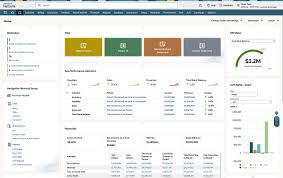
NetSuite is a full Enterprise Resource Planning (ERP) system, which means it goes far beyond accounting to encompass inventory management, order management, supply chain, HR, payroll, CRM, and e-commerce, all in a single integrated system with a single database.
The reason this matters is data consistency. When you have separate systems for accounting, inventory, CRM, and HR that only partially integrate, you inevitably end up with data discrepancies; the accounting system says one thing, the inventory system says another, and reconciling them consumes significant time and creates significant errors. NetSuite eliminates this by putting everything in one place.
For Nigerian startups that have scaled to a point where operational complexity is creating management challenges, particularly those in e-commerce, manufacturing, distribution, or any business where inventory management is significant, NetSuite's integration is compelling. The implementation cost and ongoing subscription are substantial, but so is the operational value for businesses at the right stage.
The honest timing question is: when should you move to NetSuite? The answer for most Nigerian startups is later than you think you need to. NetSuite's power comes with significant implementation complexity, and implementing it before your business is ready, before the processes it automates are actually stable and well-defined, creates more problems than it solves. Most startups should exhaust the capabilities of QuickBooks or Xero before seriously evaluating NetSuite.
Wave

On the opposite end of the cost spectrum, Wave deserves mention as a genuinely capable free accounting tool. For early-stage, bootstrapped startups with straightforward financial operations, Wave provides core accounting functionality, invoicing, expense tracking, and basic financial reporting at zero cost.
The tradeoff is scalability. Wave's free model is supported by paid services like payroll and payment processing, and its feature set is intentionally limited compared to paid alternatives. For a startup that needs to conserve every naira in its earliest stages, Wave is a practical starting point. But plan for the migration to a more capable tool when growth demands it.
Building a Financial Stack: The Integration Advantage

The businesses that manage their finances most effectively in 2026 aren't doing it with a single tool. They're building integrated financial stacks where data flows automatically between systems, and that integration is where the real operational leverage comes from.
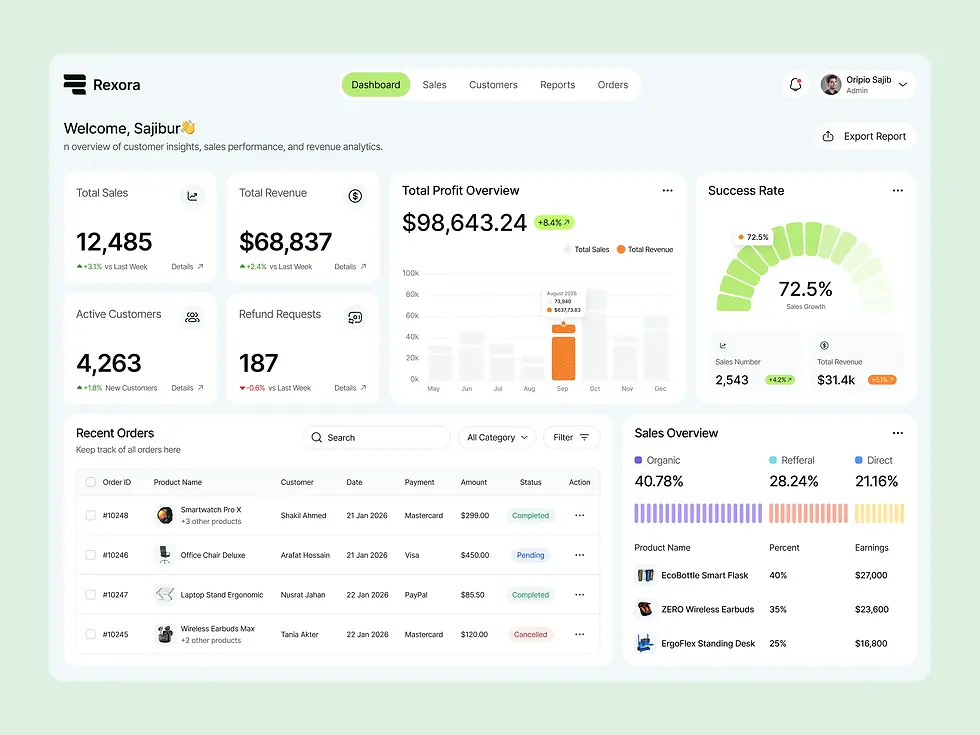
Think about what a well-integrated financial stack looks like in practice. Your Nigerian business bank account (Moniepoint or Kuda) syncs automatically with your accounting software (Xero or QuickBooks), so every transaction is recorded and categorised without manual data entry. Your spend management tool (Ramp or a local equivalent) feeds expense data directly into the accounting system, so corporate card spending is captured in real time rather than reconstructed from receipts at month's end. Your invoicing, which sits in the accounting software, automatically updates your accounts receivable, sends payment reminders, and records payments when they arrive.
The result is a financial system that is largely self-maintaining, one that produces accurate, current financial information without requiring constant human intervention. The founder, who used to spend every Sunday afternoon doing bookkeeping, now gets a dashboard that shows them exactly where they stand, updated in real time, requiring intervention only for exception management.
This frees up something genuinely valuable: mental bandwidth. Financial anxiety, the constant background noise of not quite knowing whether you can make next month's payroll, whether a particular client's late payment is going to create a cash flow problem, whether your burn rate is sustainable, is one of the most debilitating aspects of running a startup. Good financial systems don't eliminate the underlying challenges, but they eliminate the uncertainty. And certainty, even about difficult situations, is easier to manage than anxiety about things you can't quite see clearly.
The Right Tool at the Right Stage: A Practical Framework
The most common mistake startups make with financial tools is either adopting tools that are too simple for their current needs, staying on spreadsheets when accounting software is clearly necessary, or adopting tools that are too sophisticated, spending significant time and money implementing systems that the business isn't complex enough to benefit from yet.
Early-stage startups: prioritise simplicity and local compatibility
At this stage, you need basic financial visibility and the ability to receive and make payments efficiently. For a Nigerian startup, this means a local business bank account (Kuda or Moniepoint, depending on whether you're more digital-first or POS-dependent), basic accounting software (FreshBooks if you're service-based, Wave if you're extremely cost-conscious), and that's essentially it. Don't over-engineer this. You have too many other things to figure out.
Growth-stage startups: prioritise automation and control
When you're hiring a team, managing multiple client relationships, and starting to plan for fundraising, the needs shift significantly. You need accounting software that produces investor-grade reporting (QuickBooks or Xero), some form of spend management to maintain financial discipline as the team grows, and ideally a local fintech layer that handles the day-to-day Nigerian payment infrastructure. This is also the stage at which integrating your tools pays significant dividends.
Scaling startups: prioritise integration and insight
At this stage, you have the resources to invest in more sophisticated systems, and the complexity of your operations justifies it. The question shifts from "which accounting tool should I use" to "how do I build a financial infrastructure that supports operations across multiple products, multiple markets, and multiple entities without creating a management nightmare." This is where ERP evaluation becomes relevant, where dedicated CFO-level thinking about financial architecture is worth the investment, and where the quality of your financial data directly determines the quality of your strategic decision-making.
The Deeper Point: Financial Systems as Competitive Advantage
It's tempting to think of financial tools as purely defensive, things you implement to avoid problems rather than things that create positive value. That framing is wrong, and it leads startups to underinvest in financial infrastructure.
Good financial systems create competitive advantage in ways that are concrete and meaningful. They allow you to price more accurately because you have real visibility into your costs. They allow you to identify your most and least profitable clients, products, or services, so you can make strategic decisions about where to focus. They allow you to negotiate better with suppliers because you understand your cash flow cycle well enough to offer fast payment in exchange for better pricing. They allow you to raise capital more effectively, because your financial reporting is immediately credible and investors don't have to spend time untangling your books.
And perhaps most importantly: they allow you to sleep at night. Not because everything is going well, startups are hard, and the challenges don't go away, but because you know exactly what you're dealing with. That clarity, in a business environment as complex and unpredictable as Nigeria's, is genuinely valuable.
The startups that invest seriously in financial infrastructure aren't just protecting themselves from chaos. They're building the foundation that makes everything else possible, the fundraising, the hiring, the expansion, the strategic bets that turn a startup into a real business.
Get the financial systems right early. You'll thank yourself later.


Comments